The ContentSherpa Knowledge Base is a powerful, centralized repository for collecting, organizing, and structuring company-specific information. It enables the AI engine to deliver contextually accurate, real-time responses to visitor queries using your content. When pre-configured supplementary responses don’t address a visitor’s question, the AI intelligently draws from the Knowledge Base to provide relevant, company-specific insights.
The Knowledge Base acts as a central hub and offers flexibility in how information is added and maintained. You are able to upload and manage various types of information to a single location, including PDF documents, website URLs, and pasted or written text.
The more relevant and comprehensive your uploaded content, the more accurate and effective the AI becomes in handling real-world queries.
Why do we need to import data into the Knowledge Base?
A Knowledge Base relies on approved source content to answer user questions correctly, avoid guessing or hallucinated responses, and stay aligned with your organization’s messaging and policies
This source contains trusted content imported into the Knowledge Base through file uploads, CSVs, or website sitemaps. The AI uses this information as its primary reference to provide accurate, consistent, and up-to-date responses. All answers generated from this source are grounded in the uploaded or indexed content, ensuring reliability, compliance, and alignment with the original documentation.
You can add a source in two ways: Single Record Entry and Bulk Import Options.
Adding a source to your Knowledge Base using Single Record Entry
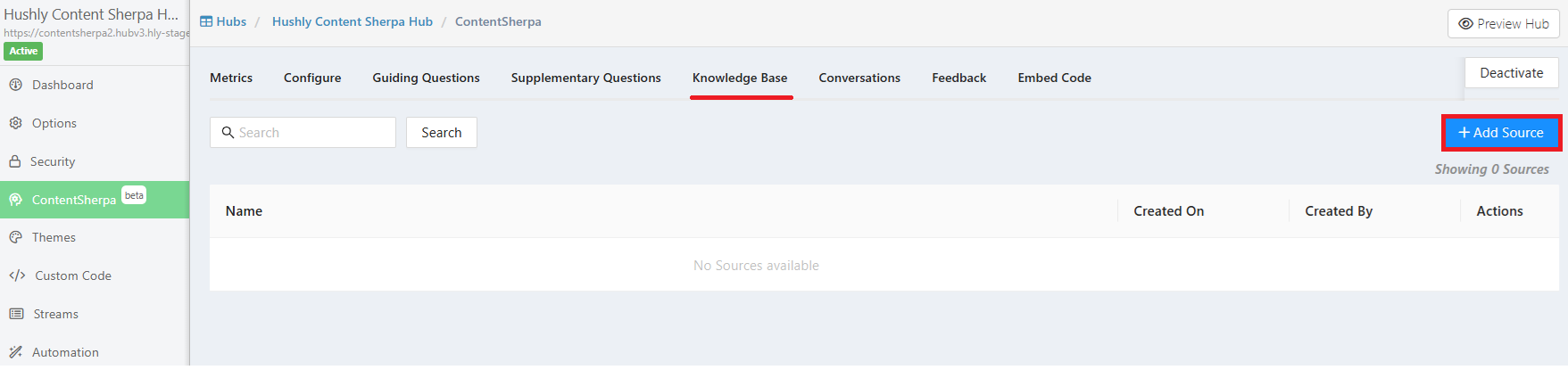
- Navigate to the Knowledge Base tab in the ContentSherpa interface. The Knowledge Base tab displays the Add Source button. Click Add Source.
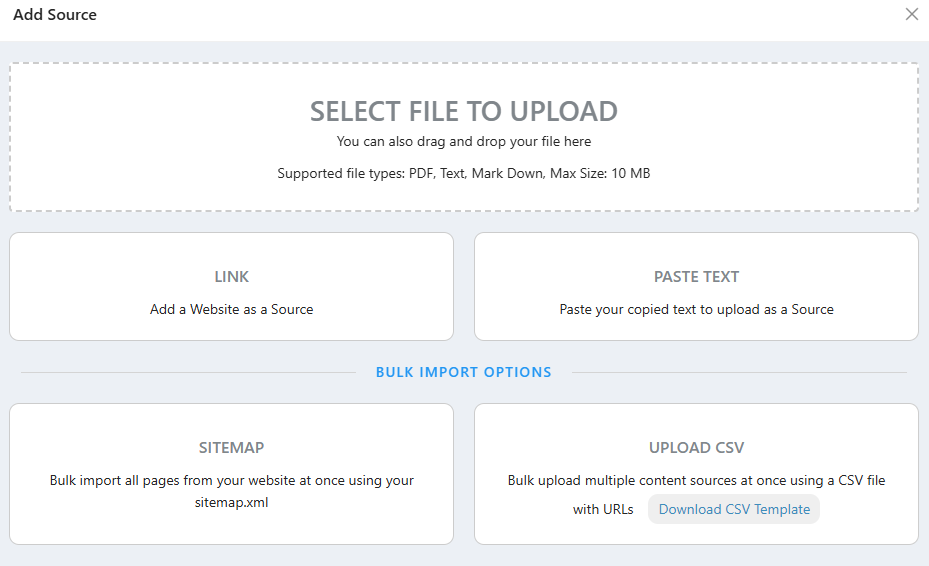
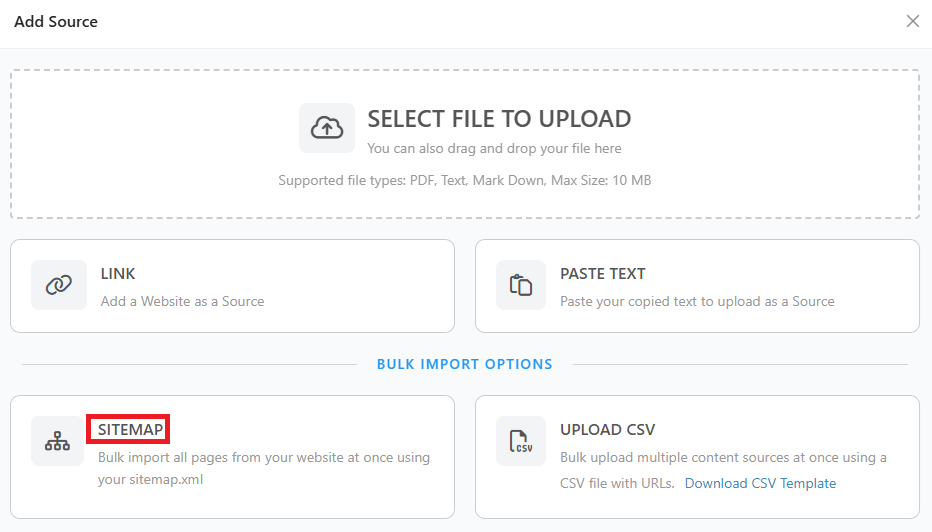
- The Add Source pop-up appears, allowing you to select a source type. You can upload a PDF document, add a link (for example, your company website), or paste text as a source. You can also add sources by uploading a CSV file or by adding sitemaps.
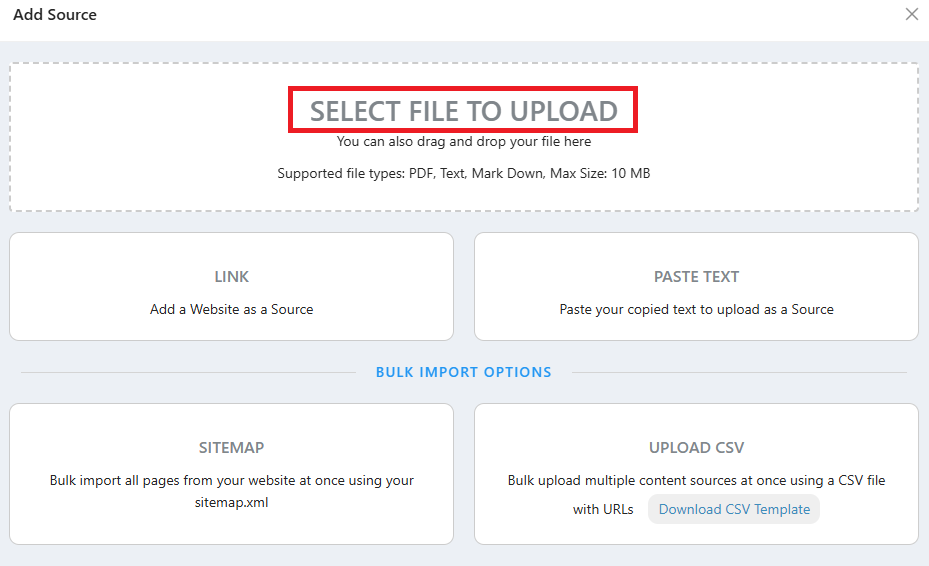
- Click SELECT FILE TO UPLOAD, drag and drop the PDF into the upload area, or browse your device to choose the desired file.
- The uploaded PDF file is added to the ContentSherpa Knowledge Base.
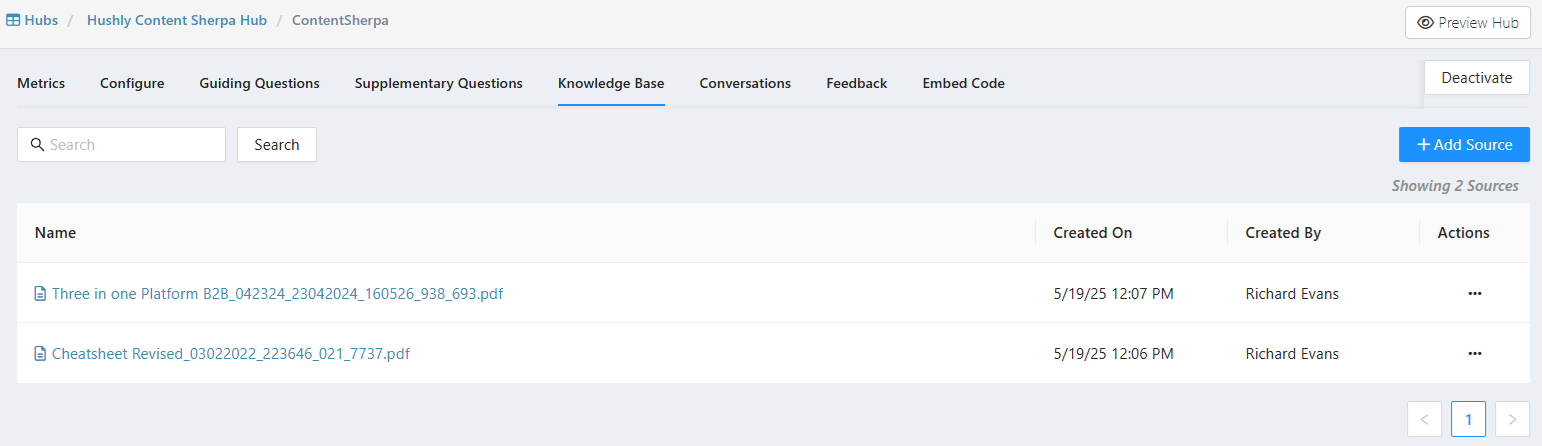
- The uploaded PDF file is added to the ContentSherpa Knowledge Base.
- Click LINK to add a website or webpage as a source.
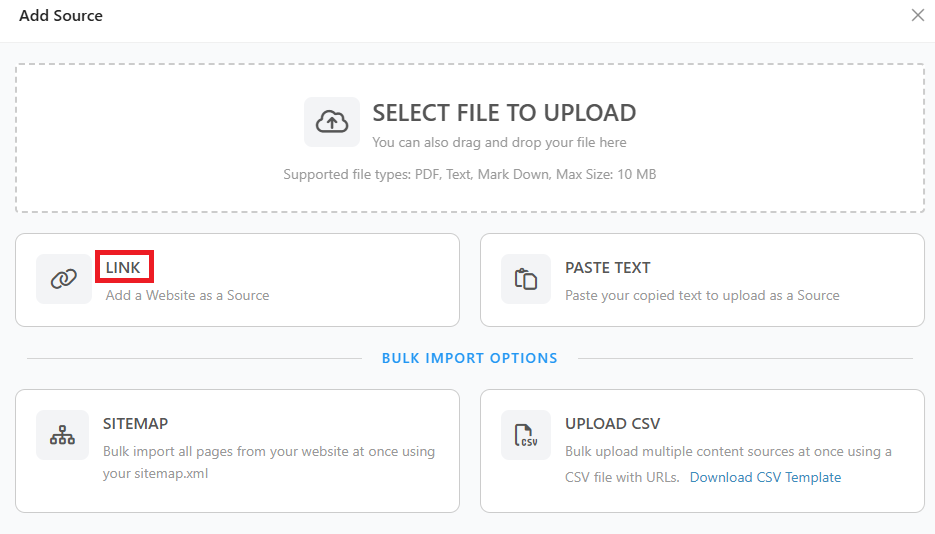
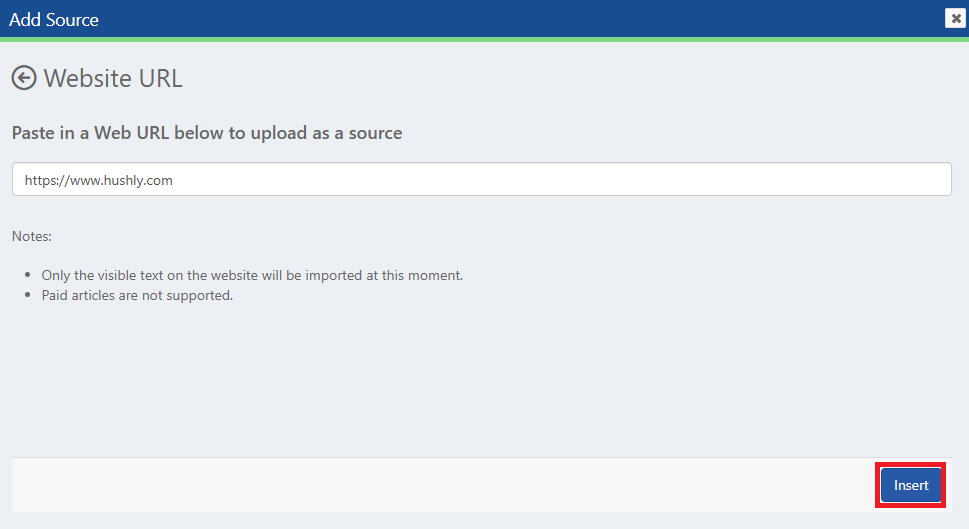
- The Add Source pop-up is displayed. Add the URL and click Insert.
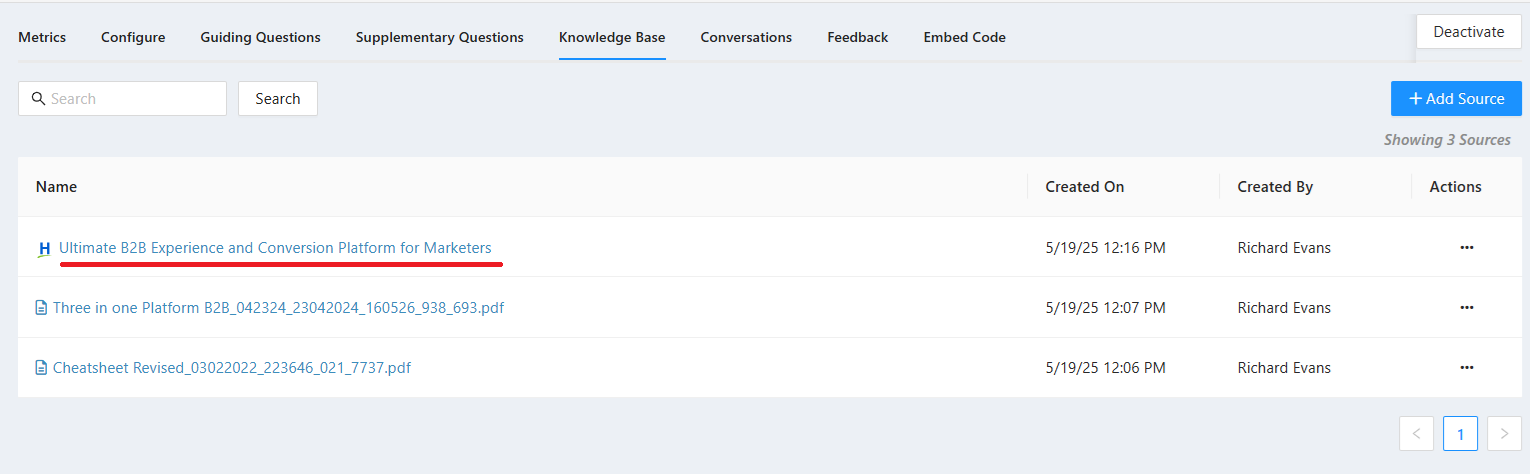
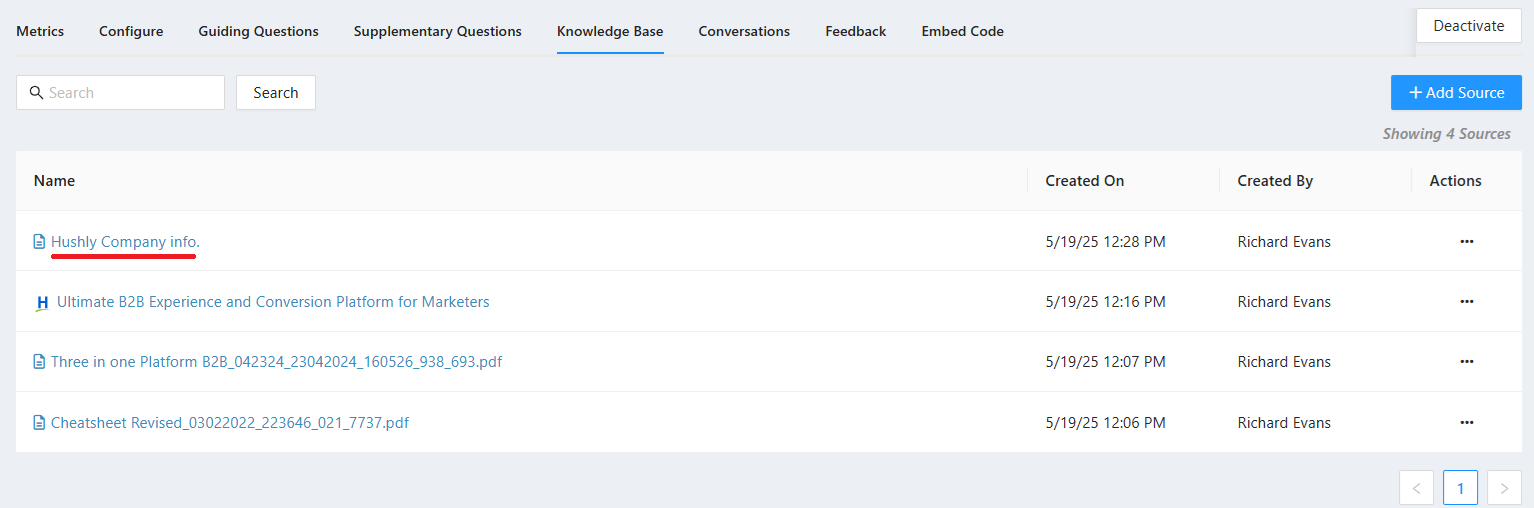
- The Source is added to the ContentSherpa Knowledge Base.
- The Add Source pop-up is displayed. Add the URL and click Insert.
- Click PASTE TEXT to add your copied text as a Source.
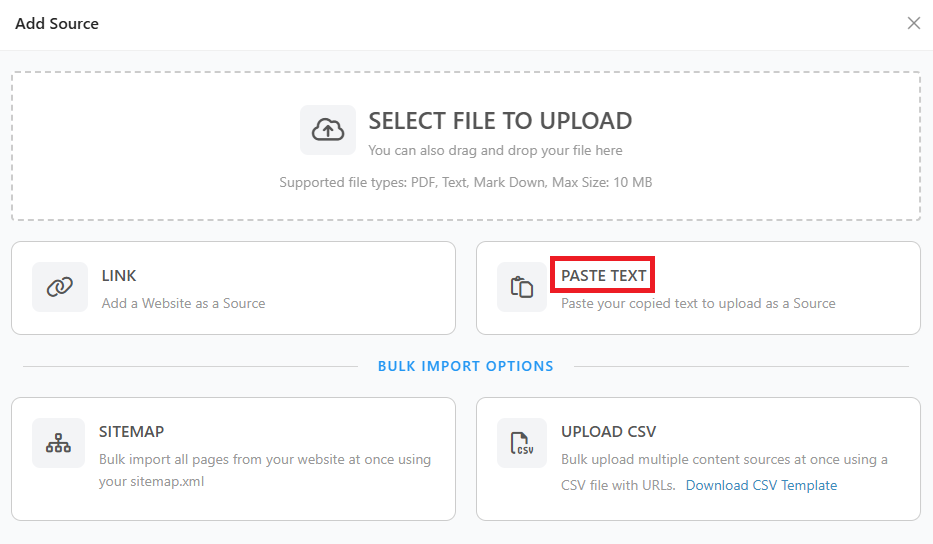
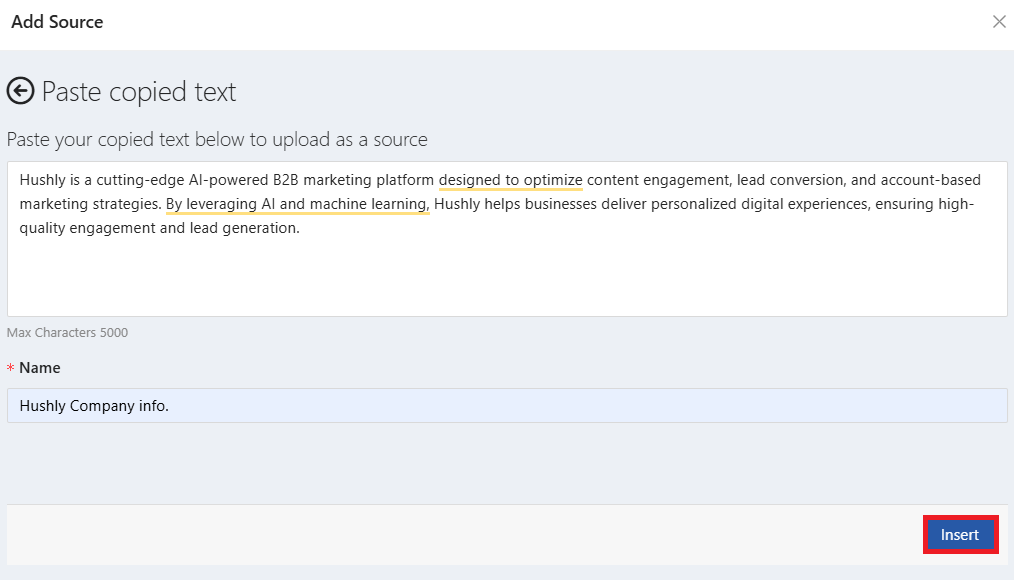
- The Add Source pop-up is displayed. You can paste text with 5000 characters, enter a Name, and click Insert.
- The Source is added to the ContentSherpa Knowledge Base.
- The Add Source pop-up is displayed. You can paste text with 5000 characters, enter a Name, and click Insert.
- Click SELECT FILE TO UPLOAD, drag and drop the PDF into the upload area, or browse your device to choose the desired file.
Adding a source to your Knowledge Base using the Bulk Import Option
The Bulk Import feature allows you to quickly bring large amounts of content into the platform without needing to add pages one by one. You can choose from two convenient import methods:
1. Sitemap Import
Use this option to automatically import all pages from your website using your sitemap.xml file.
Ideal for websites with many pages
Reads your sitemap.xml and pulls in all listed URLs
Saves time by detecting every page already published on your site
Ensures no pages are missed during import
Simply paste the link to your sitemap.xml, and the system will fetch all available pages.
2. Upload CSV
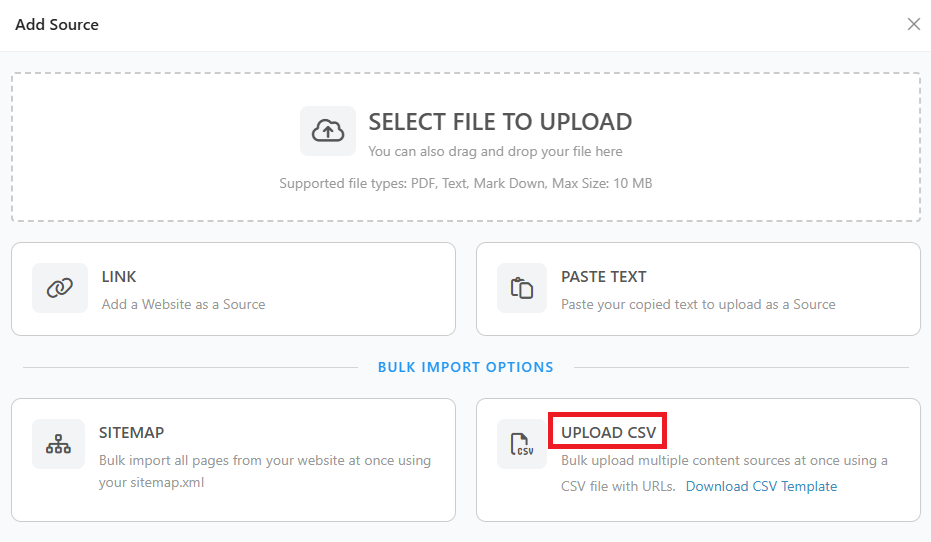
Use this option to bulk upload multiple content sources at once using a CSV file containing URLs.
Perfect when you have a custom list of pages
Allows you to upload hundreds or thousands of URLs in one step
Gives full control over which pages to import
Supports a standard CSV structure
You can also download the CSV template to format your data correctly before uploading.
Sitemap Import
- Click Sitemap to import all the pages as your source.
- The Add Source pop-up provides fields to enter the Sitemap URL, assign a Source Name, and enable or disable the Process Nested Sitemaps option, which is disabled by default. When the Process Nested Sitemaps toggle is enabled, any sitemaps referenced in the main sitemap will be imported automatically.
Once added, the system will automatically fetch and import all the pages listed in the sitemap.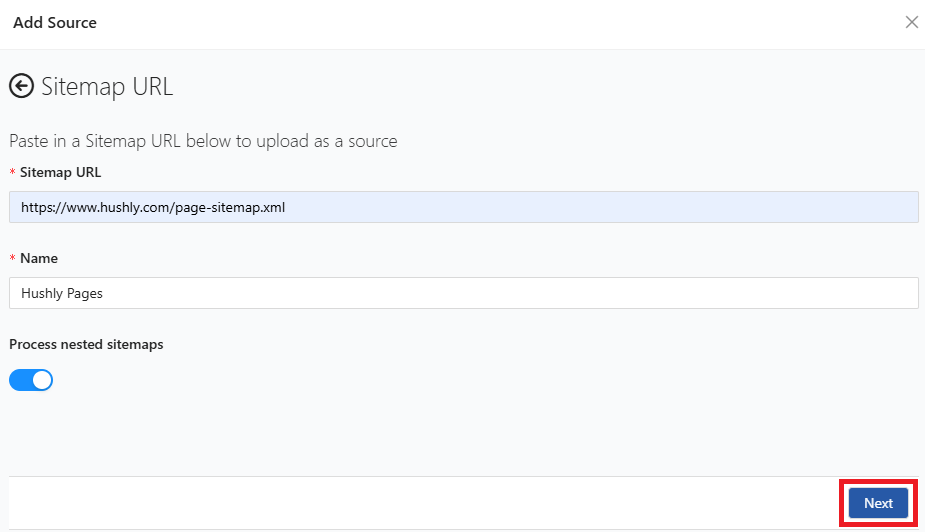
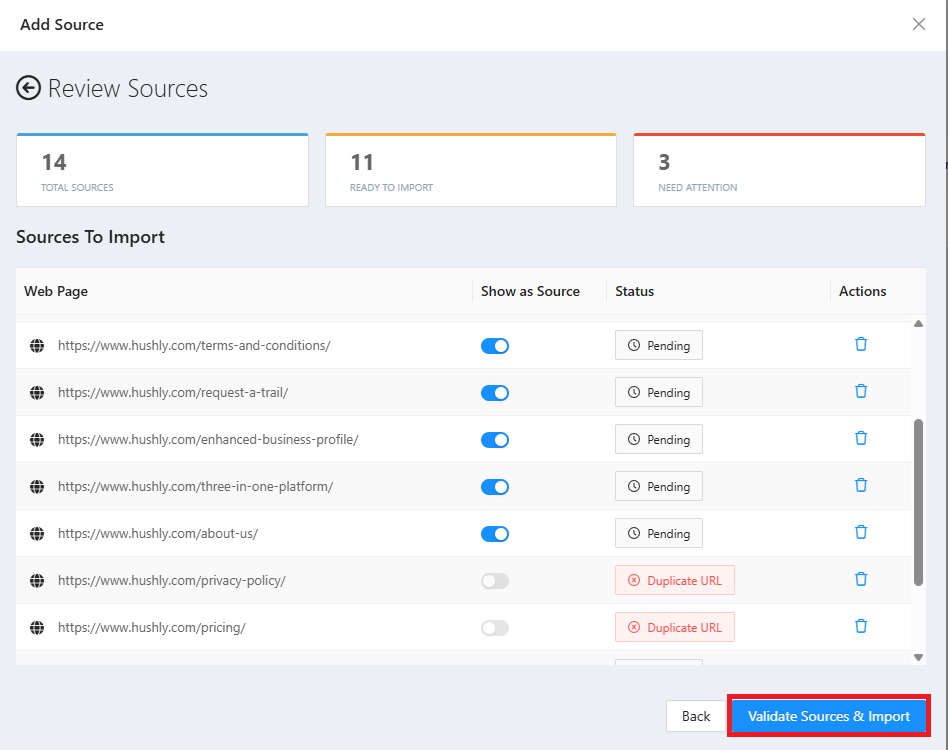
- The Review Sources page is displayed, allowing you to verify, manage, and finalize all the web pages that will be imported from your sitemap or added manually. This page provides a detailed overview of each source, helping you ensure accuracy before proceeding with the import.
- Summary Cards: At the top, three summary indicators display:
Total Sources - The total number of collected URLs.
Ready to Import - The URLs that are valid and ready for processing.
Need Attention - URLs that require review due to issues such as duplicates or validation errors. - Sources To Import: This table lists all detected URLs along with their configurable options:
Web Page: Shows the full URL of each source.
Show as Source: A toggle to include or exclude the URL from being displayed as a source.
Status: Indicates the validation state of each URL (e.g., Pending, Duplicate URL, or other errors).
Actions: Provides a delete option to remove a specific URL from the list. - Validate Sources & Import - Clicking this button validates all URLs and proceeds with importing the selected sources.
- Summary Cards: At the top, three summary indicators display:
- This page provides a detailed overview of all the URLs imported from the sitemap and displays their current processing status. It helps users verify which sources have been successfully added, identify any issues, and make final adjustments. Click Close to continue.
- Sources To Import Table -The main table lists each detected webpage along with the following details:
Web Page: The title and URL of each webpage imported from the sitemap.
Show as Source: A toggle that allows users to control whether the page should appear as a visible content source.
Status: Indicates the outcome of the import process for each URL:
Completed – Successfully imported and processed (green).
Duplicate URL – The page already exists or has been repeated, requiring attention (red).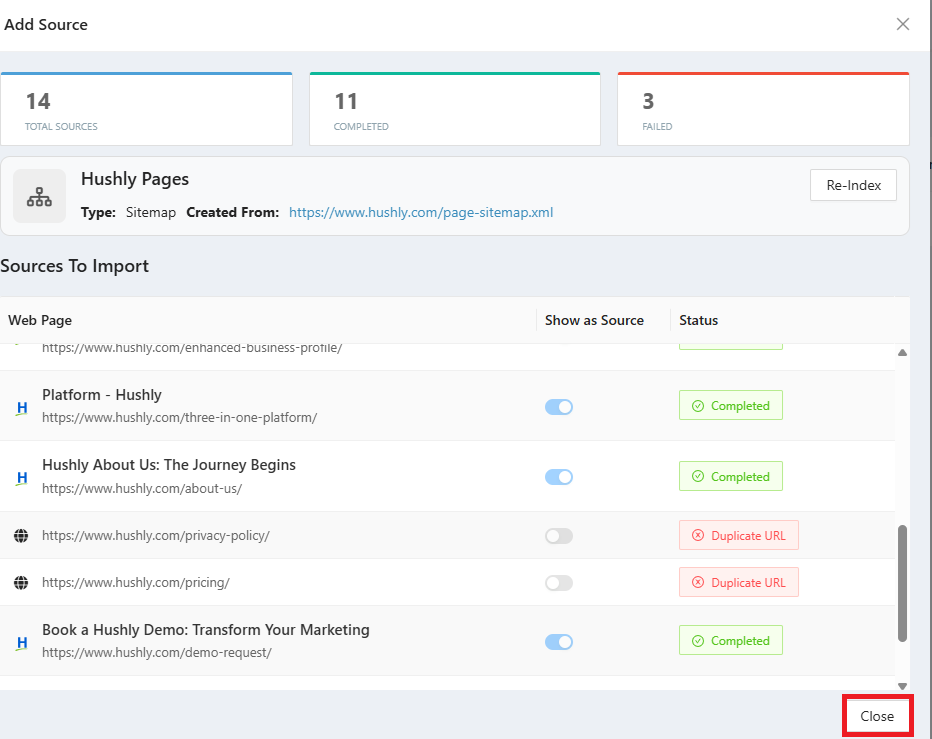
- Sources To Import Table -The main table lists each detected webpage along with the following details:
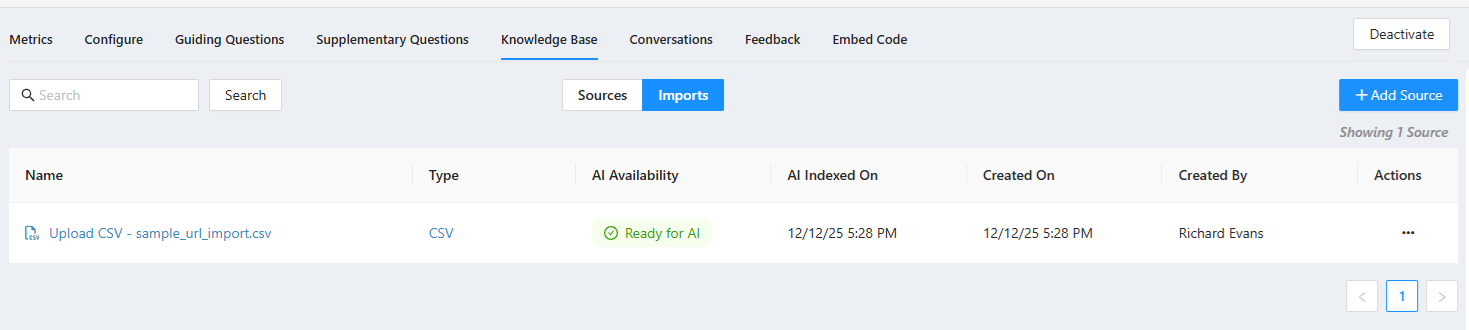
- The Source is added to the ContentSherpa Knowledge Base. The Imports tab displays all the content sources that have been imported into the Knowledge Base for AI processing. Each imported source is listed with key details, including its name, type, AI readiness, indexing time, creation time, and creator information. You can select the Source tab to view all the URLs of the imported sitemaps.
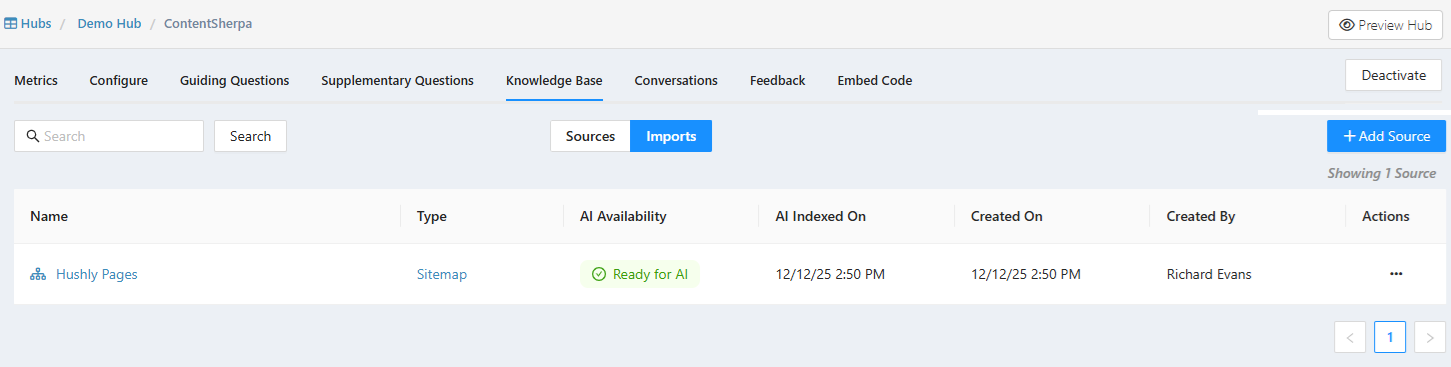 Note: You can delete an imported source by clicking the three-dot menu in the Actions column.
Upload CSV
- Click the Upload CSV link to add a source. Use this option to bulk upload multiple content sources at once using a CSV file containing URLs.
- The Review Sources page is displayed, allowing you to verify, manage, and finalize all the web pages that will be imported from your sitemap or added manually. This page provides a detailed overview of each source, helping you ensure accuracy before proceeding with the import. Clicking Validate Source & Import validates all URLs and proceeds with importing the selected sources.
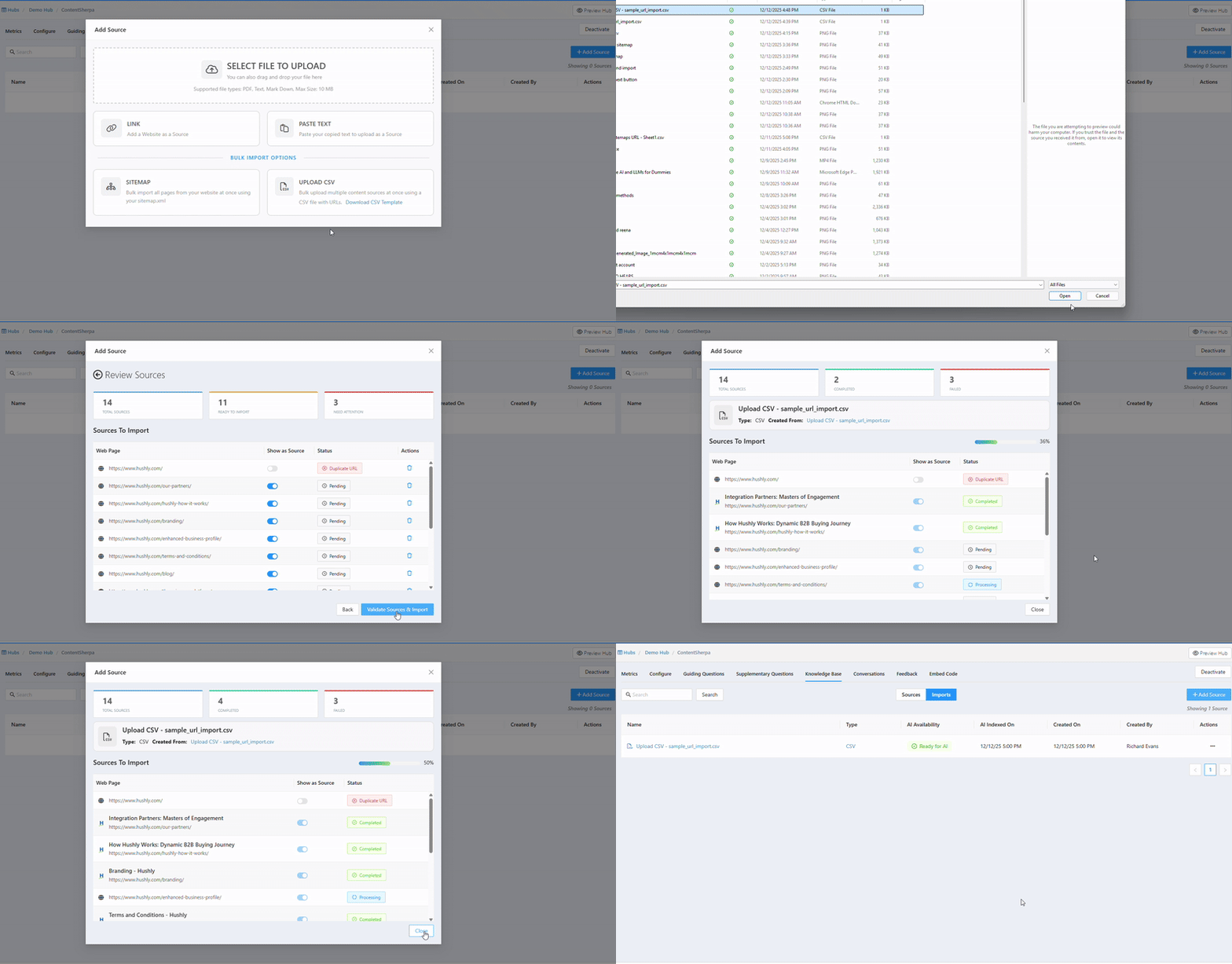
- The Source is added to the ContentSherpa Knowledge Base. The Imports tab displays all the content sources that have been imported into the Knowledge Base for AI processing. Each imported source is listed with key details such as its name, type, AI readiness, indexing time, creation time, and creator information. You can select the Source tab to view all the sitemaps' URLs imported.
Was this article helpful?
That’s Great!
Thank you for your feedback
Sorry! We couldn't be helpful
Thank you for your feedback
Feedback sent
We appreciate your effort and will try to fix the article